
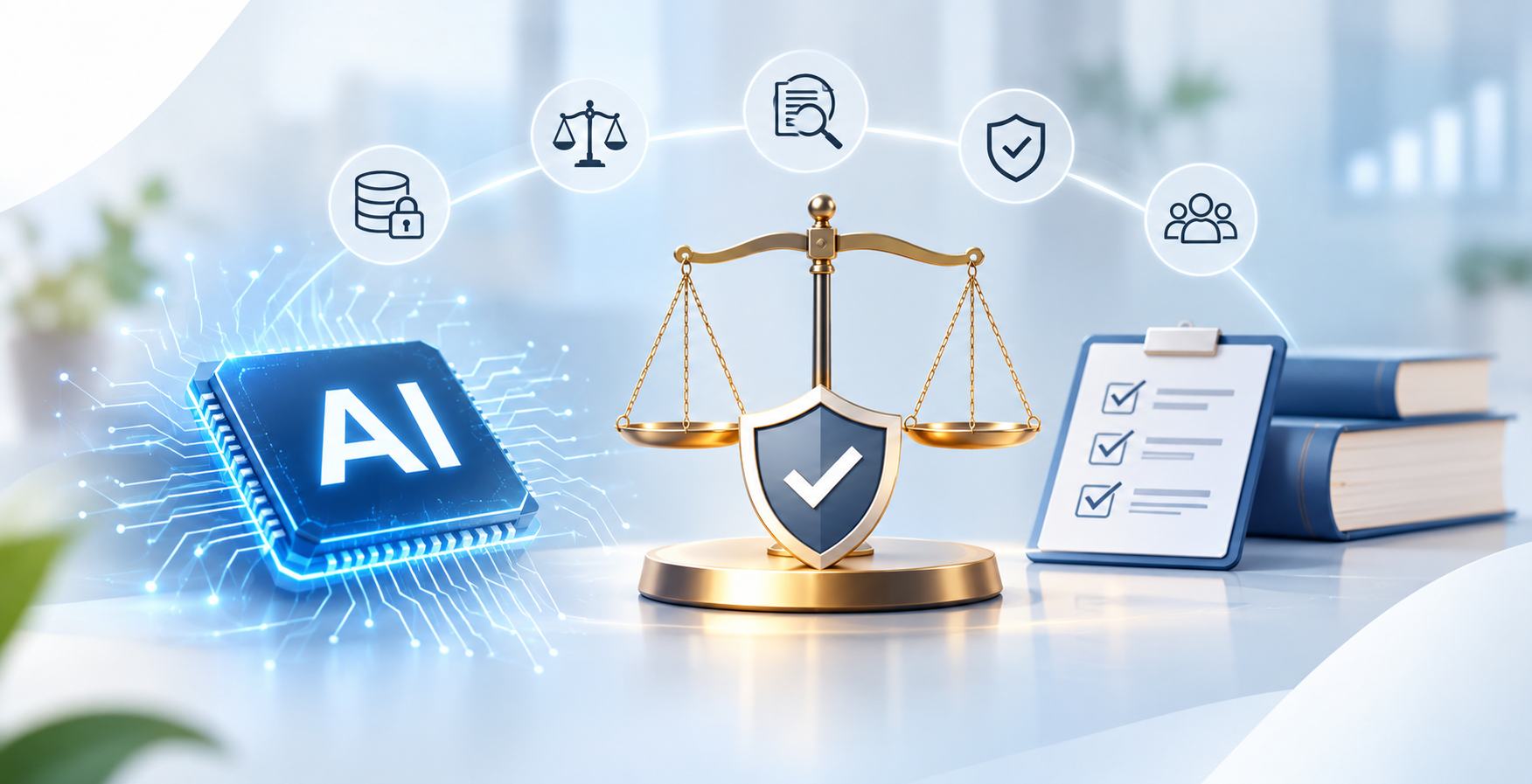
AI Governance, Explainable AI, and the Future of Compliance Management
Summary
Artificial Intelligence is rapidly becoming part of everyday business operations.
Organizations are using AI to automate workflows, monitor regulatory changes, assess risks, generate reports, and improve decision-making. In compliance management, AI is helping businesses move faster and operate more efficiently than ever before.
However, as AI adoption grows, a new challenge is emerging.
Who governs the AI?
If businesses rely on AI to support compliance decisions, regulators, auditors, customers, and stakeholders will increasingly expect organizations to demonstrate that these systems are transparent, reliable, accountable, and fair.
This is where AI governance and explainable AI become essential.
The future of compliance management will not simply be about using AI. It will be about using AI responsibly.
Why AI Governance Is Becoming a Compliance Priority
For years, organizations focused primarily on complying with external regulations.
Today, businesses must also think about governing the technologies they use internally.
As AI becomes involved in compliance monitoring, risk assessments, reporting, and decision-making, organizations need confidence that the technology is operating correctly.
Regulators around the world are also increasing their focus on AI oversight.
Concerns around:
- Data privacy
- Algorithmic bias
- Transparency
- Accountability
- Cybersecurity
- Ethical decision-making
are driving discussions around AI regulation and governance frameworks.
For compliance teams, this creates a new responsibility:
Not only must they manage compliance risks, but they must also understand the risks associated with AI itself.
What Is AI Governance?
AI governance refers to the policies, controls, processes, and oversight mechanisms that ensure AI systems are used responsibly and effectively.
The goal is simple:
To ensure AI supports business objectives without creating unacceptable legal, regulatory, operational, or reputational risks.
Effective AI governance helps organizations answer questions such as:
- How is AI being used?
- What data is being processed?
- Who is accountable for AI-generated decisions?
- How are risks being monitored?
- How are errors identified and corrected?
Just as organizations have governance frameworks for finance, cybersecurity, and compliance, AI is increasingly becoming another area requiring formal oversight.
Why Explainable AI Matters in Compliance
One of the biggest concerns surrounding AI is the so-called “black box” problem.
An AI system may generate a recommendation or identify a compliance risk, but users may not understand how that conclusion was reached.
In compliance management, this can become problematic.
Imagine a scenario where an AI system flags a regulatory risk or prioritizes a compliance issue.
Compliance professionals must be able to understand:
- Why the issue was flagged
- What factors influenced the decision
- What supporting evidence exists
This is where Explainable AI (XAI) becomes important.
Explainable AI focuses on making AI-generated insights understandable and transparent.
For compliance teams, transparency matters because regulatory decisions often require documentation, justification, and accountability.
AI should support compliance decisions-not create new uncertainty around them.
The Risks of Uncontrolled AI Usage
While AI offers significant benefits, organizations must also recognize the risks of unmanaged adoption.
Data Privacy Risks
AI systems often process large volumes of data. Poor governance can increase exposure to privacy and data protection issues.
Inaccurate Recommendations
AI models are only as good as the data they receive. Inaccurate data can lead to incorrect compliance recommendations.
Lack of Accountability
If responsibilities are unclear, organizations may struggle to determine who is accountable for AI-supported decisions.
Regulatory Concerns
As governments introduce AI-related regulations, businesses may face additional obligations regarding transparency and governance.
Shadow AI
Employees may begin using unauthorized AI tools without proper oversight, creating security, privacy, and compliance risks.
The goal is not to avoid AI.
The goal is to use it responsibly and under appropriate governance controls.
The Future of AI-Powered Compliance Management
The future of compliance management will combine human expertise with responsible AI adoption.
Organizations are likely to use AI to:
- Monitor regulatory updates
- Predict compliance risks
- Improve audit readiness
- Automate compliance workflows
- Analyze compliance data
- Support decision-making
At the same time, compliance professionals will continue to provide:
- Regulatory interpretation
- Risk assessment
- Governance oversight
- Ethical judgment
- Strategic direction
AI will become a powerful compliance tool, but governance will determine whether that tool creates value or risk.
Businesses that establish strong AI governance frameworks today will be better positioned to navigate future regulatory expectations and technological advancements.
Key Takeaways
- AI governance is becoming an important component of modern compliance management.
- Organizations must ensure AI systems are transparent, accountable, and reliable.
- Explainable AI helps compliance teams understand and justify AI-generated insights.
- Uncontrolled AI adoption can create privacy, governance, and compliance risks.
- The future of compliance lies in combining AI capabilities with human oversight and judgment.
FAQs
What is AI governance?
AI governance refers to the policies, controls, and oversight mechanisms used to manage AI systems responsibly.
Why is AI governance important for compliance?
It helps organizations ensure AI systems operate transparently, ethically, and in alignment with regulatory expectations.
What is Explainable AI?
Explainable AI (XAI) focuses on making AI-generated decisions and recommendations understandable to users.
Can AI make compliance decisions independently?
AI can support compliance decisions, but human oversight remains essential for interpretation and accountability.
What are the risks of unmanaged AI usage?
Common risks include data privacy concerns, inaccurate recommendations, lack of accountability, and regulatory challenges.
What is Shadow AI?
Shadow AI refers to the use of unauthorized AI tools within an organization without proper governance or oversight.
Will AI governance become a regulatory requirement?
Many regulators globally are already focusing on AI governance, and organizations should expect greater oversight in the future.
Final Thought
The future of compliance management is not just about adopting AI-it’s about governing it responsibly.
Organizations that implement AI without transparency, accountability, and oversight may create new risks while trying to solve existing ones. Those that build strong AI governance frameworks will be able to harness the benefits of automation while maintaining trust, compliance, and control.
Because in the age of artificial intelligence, responsible AI may become one of the most important compliance obligations of all.
Contact us
Complinity, India’s Leading Compliance Management Software, helps companies manage their statutory and regulatory compliances on a secure software platform.
We are currently serving companies like Max Hospital, JBM Group, TVS Credit, DCM Shriram, Oberoi Hotel, M3M apart from 1500+ Companies across 100+ industry verticals.
If you wish to know more how Complinity can help your organization minimize non-compliance risks, click the link below.

 Thank You for your interest in Complinity. Your CV has been forwarded to HR.